Neither is better. Each suits a different operator, and choosing the wrong one for your temperament and resources is a bigger mistake than choosing the less lucrative one. Here’s the comparison on the five points that decide small-business outcomes.
Getting customers. B2C reaches many people with small transactions, so it depends on volume and therefore on traffic, content or advertising. B2B reaches fewer people with larger transactions, so it depends on finding the right named accounts and starting conversations. A solo operator with no audience can start B2B faster, because ten well-researched emails to the right buyers can produce a paid pilot. B2C usually needs months of audience building first.
Pricing. A business buyer weighs a fee against what the problem costs the company, and many problems are expensive: missed prospects, slow reporting, poor service quality. A consumer weighs a price against disposable income and alternatives. That doesn’t make business buyers generous. It means value-based conversations are available to you and fees follow outcomes, not comparison shopping.
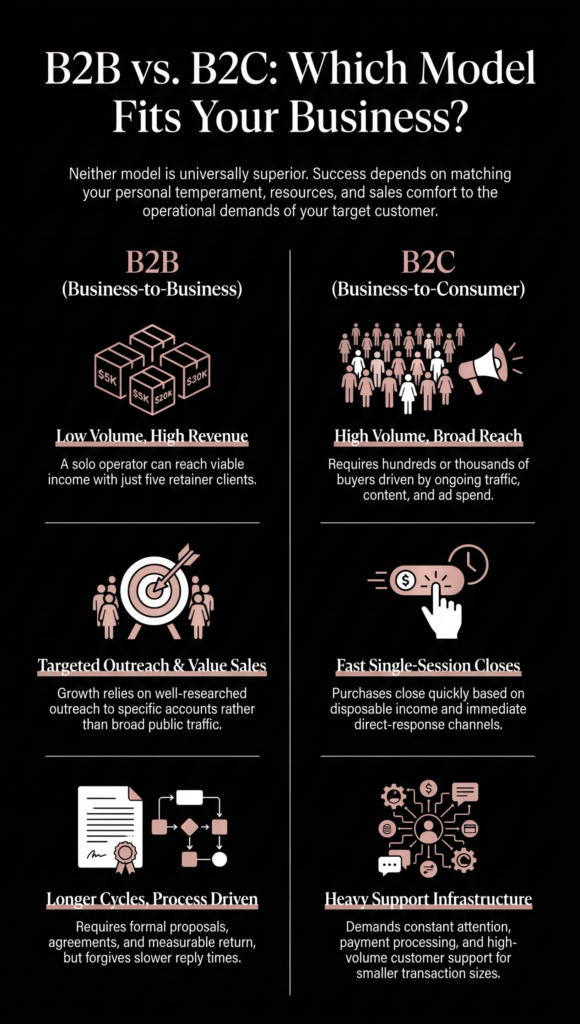
Sales cycle. Business purchases take longer and involve more people. For a small service, the group is usually one to three people, but expect a short internal discussion and a request for a sample or reference. Consumer purchases can close in a single session, which suits businesses with a strong direct-response channel.
Number of clients. B2B services need few clients to reach a viable income. Five retainer clients can support a solo operator. B2C models often need hundreds or thousands of buyers, which changes your infrastructure: payment processing, customer support, refunds and a steady stream of attention. If you have little patience for volume support, lean B2B.
Service expectations. Business clients expect process: a proposal, an agreement, an invoice with a tax number, reporting at agreed intervals. Consumers expect speed and friendliness. B2B clients forgive a slow reply more readily than a missed deadline. Consumers forgive a missed deadline more readily than a cold tone. Match your natural style to the market.
Risks. B2B revenue concentrates, so losing one client can remove a fifth of your income. B2C revenue depends on platforms and advertising costs you don’t control. A sensible hedge is to start B2B for cash flow, then add low-priced consumer products later using the credibility and audience your client work creates.
Rules apply on both sides. Australia’s Spam Act requires consent for commercial messages and covers messages sent to businesses. The US CAN-SPAM Act has no business-to-business exception. Check your outreach method against both before you send anything.
A quick test. Write down the last five purchases of each type that someone around you made, such as a company hiring a contractor or a family hiring a tradesperson. Ask which story you understand better: who decided, what worried them, what tipped them over. The side you can narrate in detail is the side you can sell to.
My recommendation for most new service businesses is B2B, with one condition: you must be comfortable approaching business owners directly. If you aren’t, B2C may suit you better, because attention can be earned through content and referrals. Business buyers tolerate higher prices, sign longer arrangements and care about measurable return. Consumers buy faster and complain louder.
Choose the buyer whose decisions you understand best. You’ll spend most of your week inside their problems, and familiarity shortens every sales conversation.
Sources
1. Australian Communications and Media Authority, “Avoid sending spam.” https://acma.gov.au/node/73
2. U.S. Federal Trade Commission, “CAN-SPAM Act: A Compliance Guide for Business.” https://www.ftc.gov/business-guidance/resources/can-spam-act-compliance-guide-business