
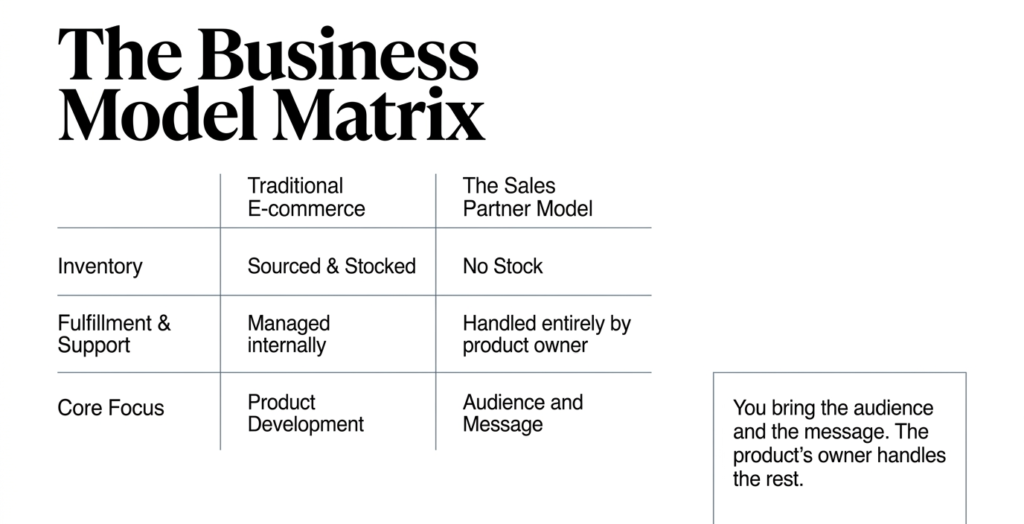
A Sales Partner promotes a product someone else built, sends interested people to it through a tracked link and earns a commission when one of those people buys. That’s the whole model. No stock, no product development, no support desk. You bring the audience and the message. The product’s owner handles the rest.
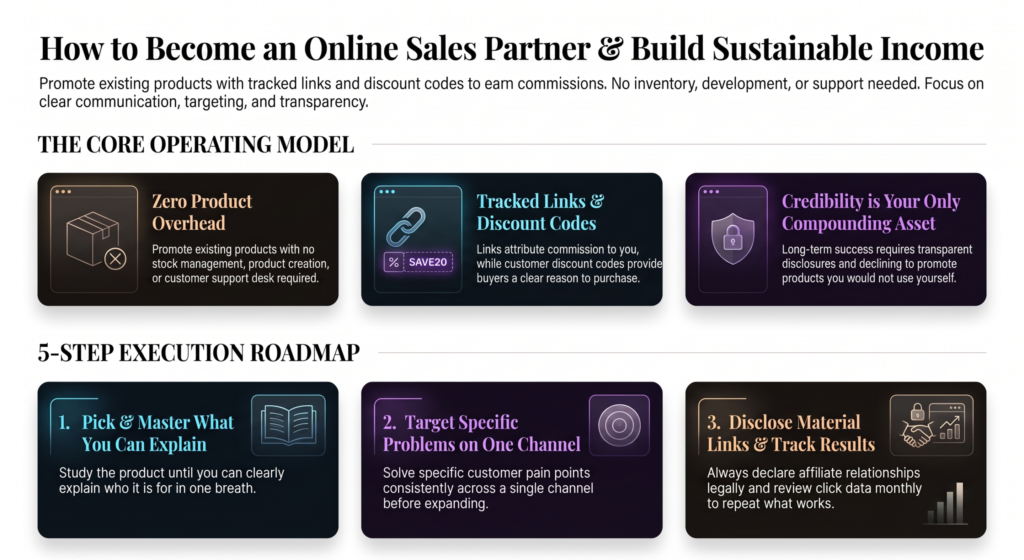
The mechanics: Every Sales Partner gets a unique tracking link and a customer discount code. The link tells the seller which sale came from you. The code gives your customer a reason to buy through you and not through a search result. When a purchase is attributed to your link, you earn commission on it. If nobody clicks, nothing is attributed, so nothing is paid.
Step one: pick something you can explain. You can’t recommend what you don’t understand. Read the product training, learn what the product does and what it doesn’t, and write the one-sentence version in your own words. If you can’t say who it’s for in one breath, you’re not ready to promote it.
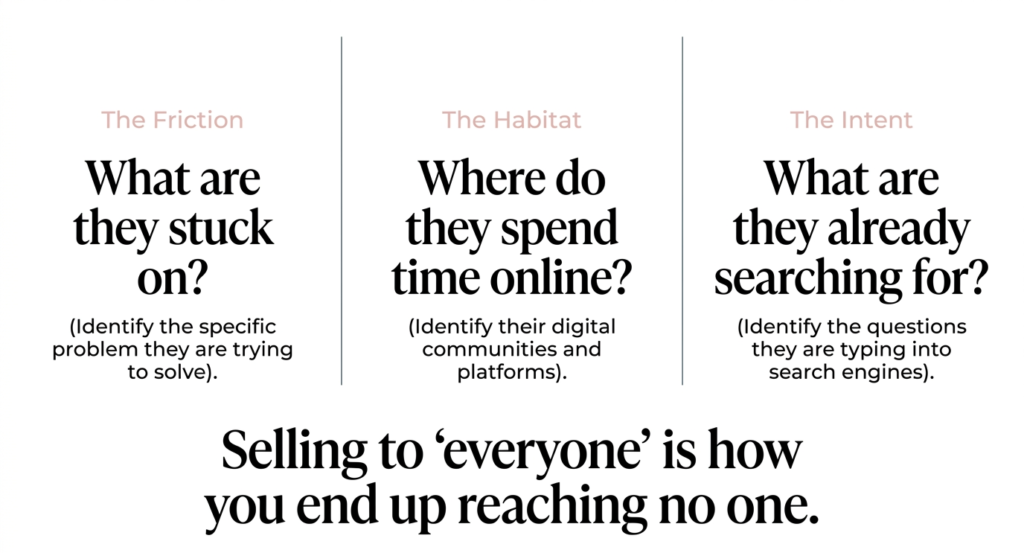
Step two: find the people with the problem. Every product solves something for somebody. Start with that person: what are they stuck on, where do they spend time online, what are they already searching for? Selling to “everyone” is how you end up reaching no one.
Step three: choose one channel and show up. A blog, a LinkedIn profile, a Facebook group you already take part in, short videos, an email list. Pick one. Publish useful material there on a schedule you can keep. Research on habit formation found that automaticity took a median of 66 days to build, with a wide spread between people. Consistency is a months-long game.
Step four: be straight about the relationship. If you earn from a recommendation, you say so. The FTC’s updated Endorsement Guides put the duty to disclose a material connection on the person making the endorsement, and Australian consumer law prohibits misleading or deceptive conduct in trade or commerce. Disclosure is cheap. Getting it wrong is not.
Step five: track what happens. Note which post, which channel and which angle produced clicks. After a month you’ll know what’s worth repeating.
What to expect. Results vary, and I won’t pretend otherwise. Some people send a handful of well-matched readers to a product and make sales. Others publish for months before a link gets a single click. The difference usually comes down to audience fit, how clearly the message is explained and how long someone keeps going. Nobody can promise you a number, and you should walk away from anyone who does.
Why this model suits some people. It’s low-cost to start, it works from anywhere and it rewards skills you can learn: explaining things clearly, understanding a buyer and publishing consistently. It doesn’t reward hype. The sceptical, time-poor buyer you’re talking to has seen every exaggerated pitch and ignores them.
A word on ethics. The people who last in this model are the ones whose audience would still trust them if every commission disappeared tomorrow. That means telling a reader when a product isn’t suitable, declining to promote things you wouldn’t use and keeping your claims inside what the seller’s own training allows. It costs you some clicks in the short term. It buys you credibility, which is the only asset in this business that compounds.
If that sounds like a way of working you’d respect, the next step is learning what the role involves, how my program works and how to choose what to promote.
Sources
1. British Psychological Society Research Digest, on how long habits take to form (Lally et al.; a median of 66 days with wide variation). https://bps.org.uk/research-digest/how-form-habit
2. Gordon Law, “New FTC Endorsement Guidelines: 8 Things Brands and Marketers Need to Know.” https://gordonlaw.com/learn/ftc-endorsement-guidelines/
3. Sprintlaw, “Section 18 of the Australian Consumer Law Explained.” https://sprintlaw.com.au/articles/section-18-of-the-australian-consumer-law-explained/